Poems of Old // The Lady of Shallot

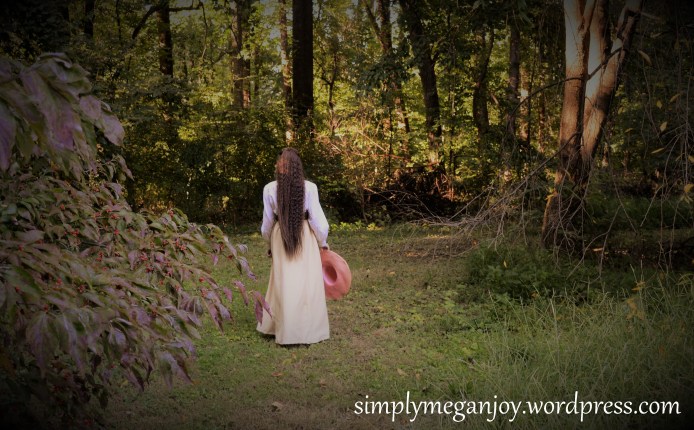
This is the first post of the new 2018 weekly series: Poems of Old! Each week, I’ll share a poem or excerpt dated 1950 or older. This poem, written by Alfred Lord Tennyson in 1842, is my favorite work by Tennyson, mostly for the reason that it plays a part in the Anne of Green Gables book and film. Wanting to be like Anne, I’ve memorized the first paragraph of part two, which you can read below. I do not necessarily find the entire story of the Lady of Shallot appealing, though I like the flow and rhythm of this famous Tennyson work.Poems of Old -  The Lady of Shallot - simplymeganjoy.wordpress.com 1.JPG

Part II

(first paragraph) 

“There she weaves by night and day

A magic web with colors gay.

She has heard a whisper say,

A curse is on her if she stay

To look down to Camelot.

She knows not what the curse may be

And so she weaveth steadily,

And little other care hath she,

The Lady of Shalott.”

Afred Lord Tennyson, 1842

……………………………………………………….

Have you ever memorized a poem just for fun?

What do you think of the new series?

What’s your favorite poem written before 1950? I always need more poem to feature!

……………………………………………………

Megan Joy

What My Bicycle Taught Me

What My Bicycle Taught Me - simplymeganjoy.wordpress.com

The other day I went biking with my brother. It was the first warm and dry day of the week, so I was quite excited to head to the seven-mile trail with my backpack filled with water bottles, an ace bandage, and a handful of bandaids, just in case. I don’t even know where in the world we could have gotten Barbie bandaids. I have a feeling that my brother would rather bleed to death than to wear a Barbie bandaid.

The first half of the trail was rocky and covered with bumpy tree roots. The dirt path was set on a hillside with woods and a field above and a bluff and train tracks below. The best part was when I peacefully rode through the edge of the forest while listening to the soundtrack of Anne of Green Gables on my phone, which was wonderful!

The trail consisted of hills, many hills. They stretched up and down, then up, then back down again. It was scored with rocky slopes and miniature mountains. When we were at the top of a hill, we would peddle and coast all the way down in the hope that we could make it to the top of the next hill.

If we were lucky, we didn’t have to peddle at all and instead just rode up the hill with the ease that comes with momentum. Nevertheless, in many other cases, the uphill climb was just too tall and far for us to make it to the top without a struggle, even with the gears set in our benefit.

You know the feeling; your bike starts to slow down, you peddle as hard as you can and wonder if you’ll make it to the top. The wheels spin slower and slower yet you’re using all your strength and energy. Then you have to decide; should I keep on peddling or get off and push my bike up to the top? You know that the wheels are barely even moving anymore, but you still want to keep on trying and stay on that bike. It would be your last resort to surrender to the hill and give up. But when do you know when it’s time to give up? You know you can’t continue like this forever, or your bike will just tip over with a lack of movement. You must choose to keep on moving ever so slowly or give up and walk.

This story can also be related to our lives. We all have hills to climb and we all want to get to the top without a struggle, but when we begin to lose our speed, momentum, and strength, we wonder if we’ll ever make it to the top. It’s hard to know when we’ve given all that we can give, and it’s even harder to know when to quit. To get off the bike and push it up the hill may seem like a failure, to give up. But sometimes we need to say, “that’s enough,” get off the bike, and truly accept that we have given all we that can.

You can only give so much.

When we have to use up all our strength, power, and energy to peddle up that hill, eventually we can’t give anymore and our bike will slowly come to a stop and simply fall over! It’s okay to take a break and say “no more” when you’ve done all that you can do. Knowing when that time is can be difficult. How long should I keep peddling? The only person who knows that answer is you. You are allowed to get off the bike, slow down, and walk to the top. It’s not giving up hope, it’s saying no to “falling over.”

Don’t breakdown, take a break!

………………………………………………………………

Do you enjoy bike riding?

Do you need to say, “that’s enough” to something in your life right now?

………………………………………………………

Megan Joy

Five Writing Misconceptions

Being a writer, I’ve gone to seminars and conferences, read writing books and articles, and was given advice by real authors on how to make my books the best that they could be. I, at one time or another, believed a lot of what I was told, and altered some of my work to fit with “the right” criteria. That was a mistake. Here’s a list of five writing misconceptions that I was told to believe.

 1. “You must begin your book with an exciting scene.”

I was once told that my book had to begin when everything is changing for my main character: “when their world is turned upside-down” so you can grab your reader’s attention. I found a few things wrong with this advice, the first being, if we all started our books the same way, they wouldn’t be special or unique. It would be pretty boring to read the same kind of introduction in every book you open, wouldn’t it? The second problem I saw was, if we began our story when the character’s world is turned upside down, how would we know what is normal for them? Without any background story on our character, how could we distinguish oddities from their ordinary life? We wouldn’t know their everyday standards. The reader must connect with the character before he or she can care or worry about what is going to happen to that main character. Creating a subtle backstory first can help the reader to recognize abnormal happenings from ordinary ones. Beginning your book with a calm opening about the character’s everyday life is absolutely fine; there are so many famous classics that begin with a simple scene, like Anne of Green Gables, A Little Princess, and Sense and Sensibility. These authors didn’t follow the rule of the “dramatic opening scene” yet they have all have become enormously popular, selling a few million copies of their books!

2. Your book should contain 70% dialog.

A published author once suggested that I didn’t have enough dialog in my books. I went on to learn that publishers sometimes determine your book’s success by the amount of white space on each page. Having a page of dialog will provide more blank spaces than a full page of narrative, therefore, I was told that more “talking” is always best. So I decided to test out this theory and wrote a short book mainly full of dialog. It was choppy and not well explained, might I say. I couldn’t elaborate on descriptions or explain the surroundings without having someone speak it aloud. This idea of “lots of dialog” is a modern concept, so I can see how it would work for books taking place in the modern world, but if you enjoy writing historical fiction like I do, then this “all dialog” theory probably won’t work. It’s just not realistic.

3. Tell your reader instead of showing (because it’s shorter).

I’ve heard this one a few times. Some say that a writer should tell the reader about something, not show them, to keep the pace moving. I however, disagree. I find it much more interesting if I am actually shown something and not just told about it. The difference can have a lasting impact on the reader. Here is an example I made up:

Telling Version: “The boy told his dog to stay. The dog stayed.”

Showing Version: “He held out his thin little hand like a fireman stopping traffic as he slowly backed away from his fur-matted friend. Oh, how those four dirty paws wanted to bound across the space between them and gift the boy with a thousand slobbery kisses, but being the keen and obedient dog that he was, he planted his feet in the dewy grass and vowed to keep as motionless as the statue he had seen in the park.”

Both versions were each made up of only two sentences, telling the same story, yet they are both extremely different. Which one provided the most information? Which one would you be more likely to continue reading if it were the opening of a book? Which one do you find more interesting? Probably, the second one is the answer to all of these questions. The second version let us know that: the boys was small, the dog was scrawny, the dog loved the boy, the dog was obedient, it happened in the morning (dewy grass), and they take walks in the park together. The first version didn’t tell us any of that!

4. End each chapter with a cliffhanger.

Many say that to keep your readers flipping pages, you must create a cliffhanger at places where the reader is most likely to put the book down, like at the end of a chapter. I find that this strategy just isn’t realistic. Yes, cliffhangers are exciting and can add a bunch to your book, but one in every chapter is a bit excessive. Besides, if you have to bait your readers with a constant strand of dangerous and uncertain situations to stay seated and continue reading, it may not be a very interesting book in the first place.

5. Reading will make you a better writer.

Now, parts of this phrase are true. Reading other books can definitely help you with writing your own book. But when people give this advice, they forget to mention that it depends on what you read! If you read a lot of terrible books over time, you may find that you morph into having those same writing habits and write terribly. While at the same time, if you read many great books full of beautiful words and brilliant plots, your writing is more likely to improve. It is like that saying, “You are what you eat.” Instead it’s, “You are what you read.” If you want to write inspiring things, read inspiring things.

Bonus misconception: The publisher is always right. 

This is quite far from the truth. Many people I’ve met dream of the day when their book is accepted for publication. When they get turned down, they revise their work to fit the publisher’s standards. Then if their book is accepted they allow the editors to change whatever they see fit, slap a generic unenticing cover on it, and ship it out. Sadly, this happens a lot and many just accept it because they want their book published. But the publisher is not always right and you shouldn’t have to be forced to alter your hard work to please someone in order to get published. You don’t always have to submit to what publishers say, because they’re not always right. You’re the author, it’s your work, your special creation that no one can take away. Self publishing is a good way to ensure that your story is published the way YOU want it.

………………………………….

Do you like to write fiction?

Were you ever told to believe one of these misconceptions?

Do you have any other writing myths or misconceptions to share?

……………………………………

Megan Joy

Diana of Avonlea // Victorian Outfit

Diana of Avonlea -  Victorian Outfit - simplymeganjoy.wordpress.com 1.JPG
Diana of Avonlea - Victorian Outfit - simplymeganjoy.wordpress.com 3
Diana of Avonlea -  Victorian Outfit - simplymeganjoy.wordpress.com 4.JPG

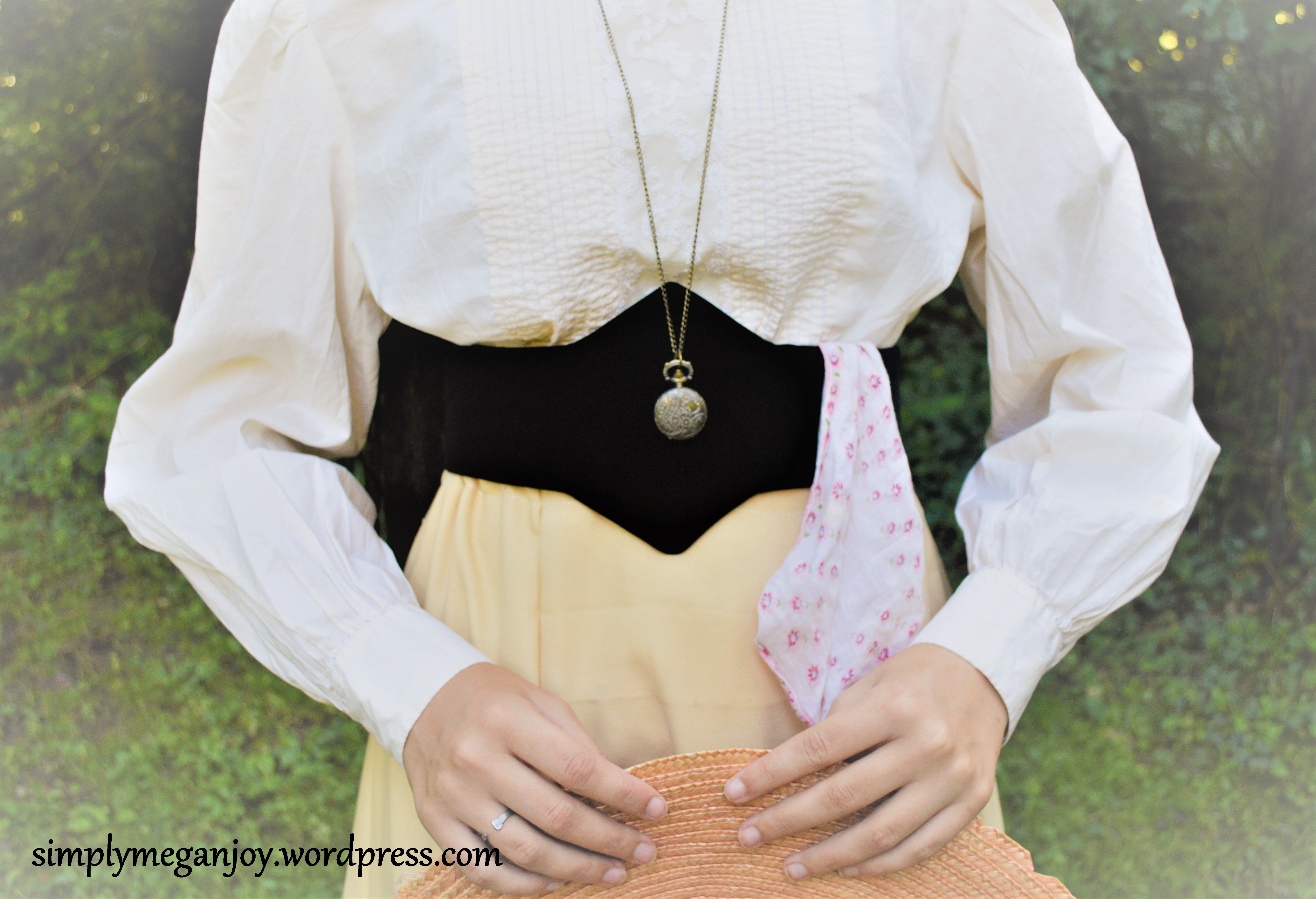
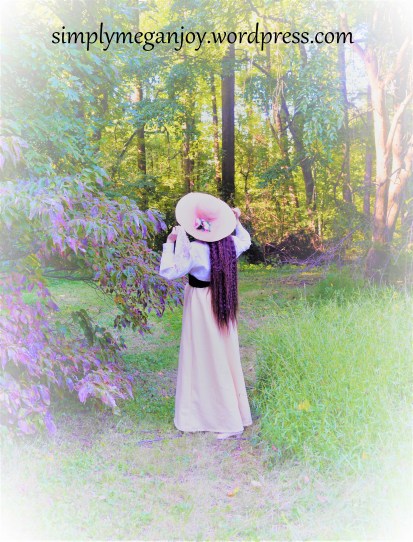
If you remember, in “Anne of Green Gables: The Sequel” Diana Berry wears something like this; a white blouse and a creamy off-white skirt. The outfit is plain and simple, yet glorious in all its splendor! I wanted to recreate the outfit, so I gathered some of my Victorian things to piece together.

Anne of Green Gables httpanneofgreengables.com (3)

Source

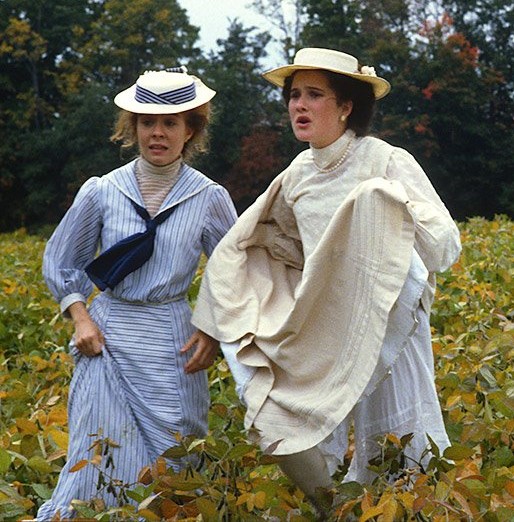
Diana wears another off-white dress in the cow scene!

Source

Diana of Avonlea -  Victorian Outfit - simplymeganjoy.wordpress.com 6.JPG

I however, chose not to venture out into a muddy field for a photoshoot, so this will have to do!

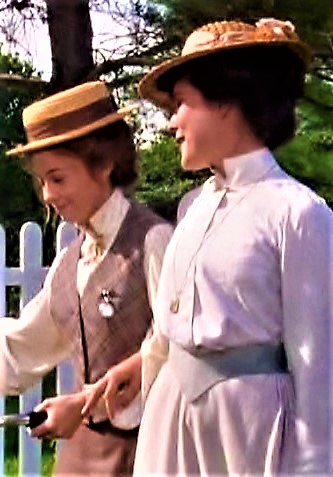
Anne also wears something like this in a scene with Gilbert.

Anne of Green Gables httpanneofgreengables.com (5)

Source

Diana of Avonlea -  Victorian Outfit - simplymeganjoy.wordpress.com 5.JPG
Diana of Avonlea -  Victorian Outfit - simplymeganjoy.wordpress.com 9.JPG

………………………………………………….

skirt // sewn by me

blouse // thrifted

shoes // thrifted

belt // sewn by me

underskirt // sewn by me

hat // thrifted

necklace // chicwish

parasol // civil war sutler

collar pin // thrifted

…………………………………………

Megan Joy

Ten Film Favorites

I love movies. Especially ones that I’ve watched since I was a kid. I sometimes think the golden years of film making are over, because most films today are meant to be watched once and then we move on with our lives. But I love the films that we can watch over and over again, remember every line, and still want to watch it a millionth time! Here are my top ten “comfort films.”

(Warning! I may add a few “fun facts” being a crazy fan of all these films. If you don’t find them as fascinating as I did: sorry.)

……………………………………………….

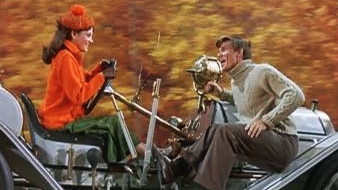
10. The Happiest Millionaire

1967 – Starring Fred MacMurray, Tommy Steele, Lesley Ann Warren, John Davidson, and Greer Garson. Music written by the Sherman Brothers.

Set in 1916, this movie is based on the true story of the Drexel-Biddle family of Philadelphia. It received an Academy Award for costume design; more than 3,000 costumes were required for the film. This is also the last Disney film in which Walt Disney had direct involvement, as he died during the production.

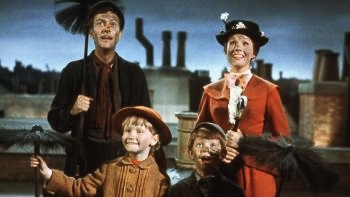
9. Mary Poppins

1964 – Starring Julie Andrews, Dick Van Dyke, David Tomlinson, Matthew Garber, Karen Dotrice, Glynis Johns, Ed Wynn, Elsa Lanchester, Arthur Treacher, and Jane Darwell. Music written by the Sherman Brothers.

Adapted from the P.L. Travers’ books, this movie is a Disney classic, receiving 13 Academy Award nominations. It would be hard to find someone who has never heard of Mary Poppins as it is thought of as possibly the greatest Disney film ever made. Walt Disney attempted to buy the story rights from Mrs. Travers back in 1936, but was rejected by the author because she believed no one could live up to her book.

8. The Apple Dumpling Gang

1975 – Starring Don Knotts, Tim Conway, Bill Bixby, Harry Morgan, Susan Clark, Clay O’Brian, Stacy Manning, and Brad Savage. Music written by Shane Tatum.

Another Disney film, this time set during the late California Gold Rush. This western comedy has everything one would hope for, jam-packed in 100 minutes. There is one scene in which Tim Conway and Don Knotts create the most hilarious improvisational skit, made up completely on the spot. It is said that while shooting the scene, many of the crew members had to leave the soundstage because they were laughing too loudly.

7. The Music Man

2003 – Starring Matthew Broderick, Kristen Chenoweth, Victor Garber, Molly Shannon, Cameron Monaghan, Debra Monk, and David Aaron Baker. Music written by Meredith Wilson.

This is the most recent adaptation of the original Broadway musical first performed in the 1950s. You have to listen to the song lyrics closely to hear the best parts of the movie. The original film included Robert Preston, Shirley Jones, Buddy Hackett, and Ron Howard. If you love musicals, humor, and Broadway, the 2003 version is just for you!

6. The Horse in the Grey Flannel Suit

1963 – Starring Dean Jones, Kurt Russell, Diane Baker, Ellen Janov, Fred Clark, and Morey Amsterdam. Music written by George Bruns.

Based on the 1955 book by Eric Hatch, this film is especially for horse-lovers. It’s about a girl who wants a horse of her own and gets one (I know, cliché and frustrating for us horseless horse-lovers). Dean Jones, a favorite actor of mine, plays the girl’s horse-allergy inflicted father. Jones was known for his pretend sneezing and also used that skill in 1965 for Disney’s That Darn Cat, co-starring Haley Mills.

5. Just Around the Corner

1938 – Starring Shirley Temple, Bill Robinson, Charles Farrell, Franklin Pangborn, Joan Davis, Benny Bartlett, and Claude Billingwater. Music written by Harold Spina.

This is my favorite Shirley Temple film. Set during the Great Depression, Shirley Temple plays the daughter of a wealthy architect. She comes home from her girls’ school to find that her penthouse is now inhabited by another family, and her new apartment is now the basement. The slump in business has caused her father to lose nearly everything. In one scene, Shirley gives a little dog a bath. In reality, it’s her own dog, Ching Ching. Shirley charged the studio a total of $7.50 to use her dog in the film as an extra. She was certainly a good business woman!

4. Hot Lead and Cold Feet

1978 – Starring Jim Dale, Don Knotts, Darren McGavin, Karen Valentine, John Williams, Michael Sharrett, and Debbie Lytton. Music written by Buddy Baker.

This Disney western tale has an amazing cast. Jim Dale stars as all three main characters, Eli, Wild Billy, and Old Man Bloodshy. It’s the story of two twins racing to win their (supposedly deceased) father’s inheritance. Don Knotts and Darren McGavin appear together again in this film, the first time being in No Deposit, No Return, 1976. One of the two trains used in this film is today on display in Disneyland in California.

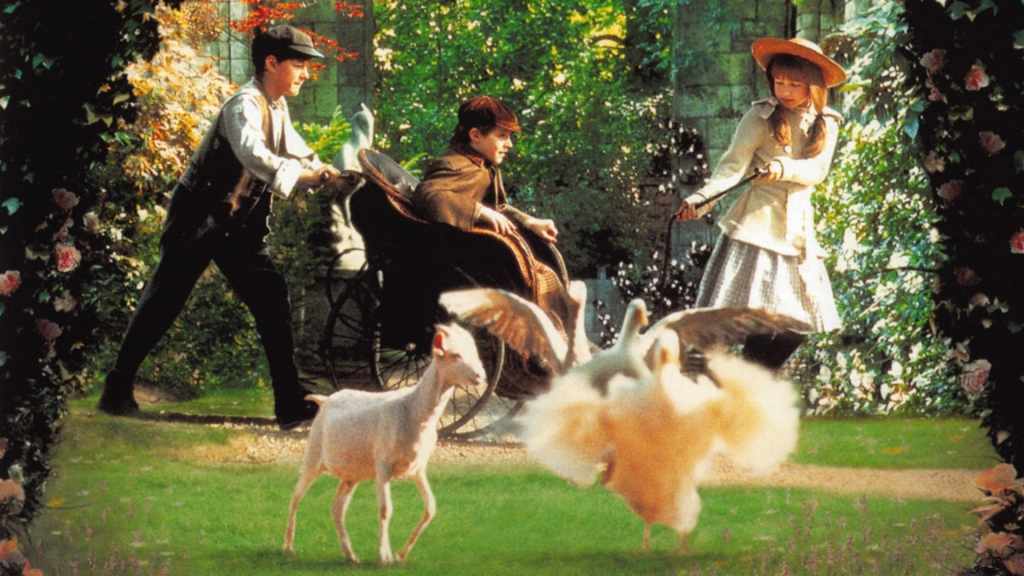
3. The Secret Garden

1993 – Starring Kate Maberly, Maggie Smith, Heydon Prowse, Andrew Knott, John Lynch, and Laura Crossely. Music written by Zbigniew Preisner.

Adapted from the Frances Hodgson Burnett classic, this film holds some of the most magical scenes. The costumes, the acting, the cast, the story, the score, and the cinematography are put together perfectly to create the chronicles of Mary Lennox, an orphaned girl sent to live in her uncle’s mansion in Victorian England. She soon becomes aware of her crippled cousin, steals a mysterious garden, and combines the two in order to bring happiness back to Misselthwaite Manor.

2. Little Women

1994 – Starring Winona Ryder, Trini Alvarado, Claire Danes, Kirsten Dunst, Susan Sarandon, Christian Bale, Gabriel Byrne, Eric Stoltz, and Mary Wickes. Music written by Thomas Newman.

Taking place during and after the American Civil War, this is the story based upon the Louisa May Alcott book, Little Women. The four March sisters are growing up without their father who has gone off to war. The enchanting and heart-warming/wrenching tale brings history to life, causing the viewer to embrace the March sisters’ world and all its plights. This movie holds the most powerful score, it melts my heart whenever I hear it, time after time.

1. Anne of Green Gables

1985 – Starring Megan Follows, Colleen Dewhurst, Richard Farnsworth, Jonathan Crombie, Schuyler Grant, Patricia Hamilton, and Marilyn Lightstone. Music written by Hagood Hardy.

Here we are: #1! This one wasn’t too hard to guess, was it? Anne of Green Gables and its sequel were based on a book series by Lucy Maud Montgomery. For those who don’t know the plot, (probably nobody) Anne, a red-haired and ambitious orphan is accidentally sent to live with Marilla and Matthew Cuthbert on Prince Edward Island. Even after she creates much havoc and breaks a slate over a boy’s head at school, the Cuthberts allow her to stay for good. The movie continues until Anne is sixteen, and later picks up in the sequel a few years later. This movie has been my favorite ever since I first watched it over a decade ago. It transports special feelings right off the screen and into my heart, letting me enter into the magical world of Anne. It has changed the way I think about the past, present, and future, and will forever be something special that I want to share with everyone!

………………………………………….……

What are your favorite movies?

Who is your favorite actor/actress?

Which of the movies on my list have you heard of/watched before?

Megan Joy