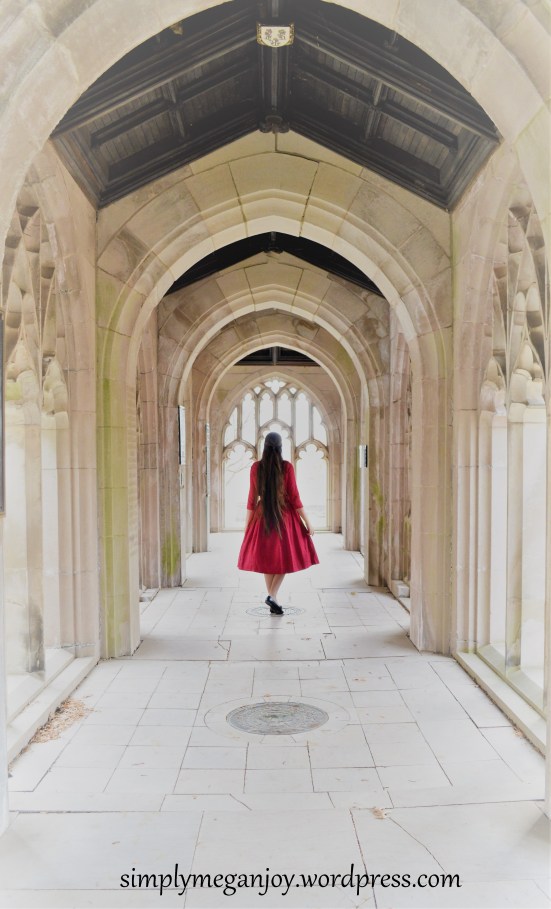
Poems of Old // Afton Water

This poem by the Scottish writer, Robert Burns, was composed in 1791, and later put to music as Flow Gently, Sweet Afton in 1837, by Jonathan Spilman. By what I’ve been recently told, I may be in some way related to Robert Burns the poet, so I feel a special connection to the words I’ve been singing for years. I love the words Burns chose to rhythm together; it’s such a lovely piece to read.

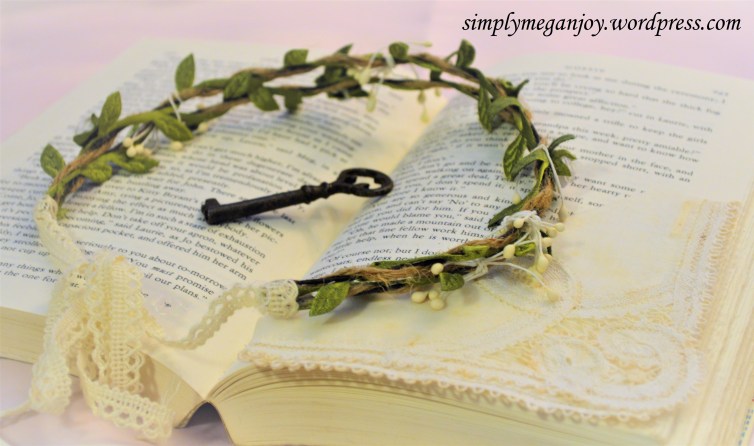
Poems of Old - Afton Water - simplymeganjoy.wordpress.com.JPG

Flow gently, sweet Afton, among thy green braes,

Flow gently, I’ll sing thee a song in thy praise;

My Mary’s asleep by thy murmuring stream,

Flow gently, sweet Afton, disturb not her dream.

Thou stock-dove, whose echo resounds thro’ the glen,

Ye wild whistling blackbirds in yon thorny den,

Thou green-crested lapwing, thy screaming forbear,

I charge you disturb not my slumbering fair.

How lofty, sweet Afton, thy neighbouring hills,

Far mark’d with the courses of clear winding rills;

There daily I wander as noon rises high,

My flocks and my Mary’s sweet cot in my eye.

How pleasant thy banks and green valleys below,

Where wild in the woodlands the primroses blow;

There oft, as mild Ev’ning sweeps over the lea,

The sweet-scented birk shades my Mary and me.

Thy crystal stream, Afton, how lovely it glides,

And winds by the cot where my Mary resides,

How wanton thy waters her snowy feet lave,

As gathering sweet flowrets she stems thy clear wave.

Flow gently, sweet Afton, among thy green braes,

Flow gently, sweet river, the theme of my lays;

My Mary’s asleep by thy murmuring stream,

Flow gently, sweet Afton, disturb not her dream.

Robert Burns, 1791

…………………………….

Do you know this as a song or a poem?

Did you ever find out that one of your ancestors is well-known?

………………………………………

Megan Joy

7 Free Bible Verse Posters to Hang on Your Wall

Seven Free Bible Verse Posters to Hang on Your Wall - simplymeganjoy.wordpress

What’s a better place to hang some inspiring and uplifting verses other than your bedroom wall? I’ve created 7 verse designs for you to print out and place where you will see them every day!

Proverbs 3:5-6

Proverbs 3 5-6

Joshua 1:9

Joshua 1-9

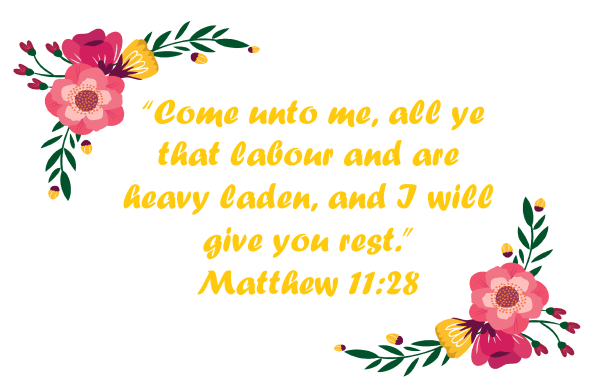
Matthew 11:28

Matthew 11-28

1st Peter 5:7

floral 5

Philippians 4:13

Philippians 4-13

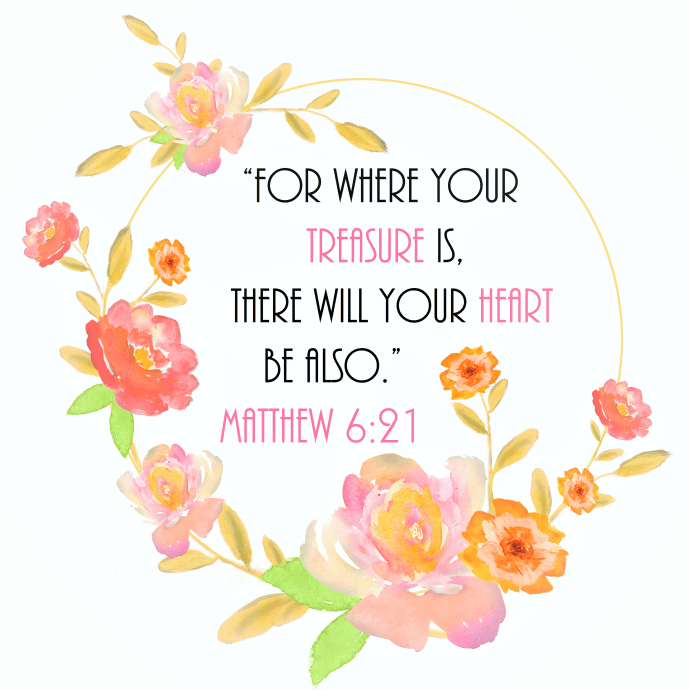
Matthew 6:21

Matthew 6-21

Romans 8:28

Romans 8-28 2nd

…………………………………………………………….

You can save these photos to your computer, print, and cut them out, and hang them wherever you like. You could give one to a friend who needs encouragement or fold one up and slip it into your sibling’s backpack with a note on the back saying how much you appreciate them! Be creative by printing them out on cardstock and give them as Valentine’s Day gifts (or save them for Easter).

P.S. All verses above were taken from the King James Version Bible.

……………………………………………… 

Which verse speaks to you the most?

Shout out to “The Hungry JPEG” for the use of their free graphic designs!

………………………………………………..

Megan Joy

Poems of Old // Weep You No More

Have you ever seen the 1995 version of Sense and Sensibility starring Emma Thomson and Kate Winslet? Do you remember the song that Marianne sings in the movie (the scene where Colonel Brandon sees her for the first time)? Well, this is it! It was originally a poem supposedly written by an anonymous poet in the 1800s, although there are rumors that it was written by the English musician John Dowland in 1603 to an alternate tune. Whether either be true, it is a beautiful work of poetry and I wanted to share it.

Poems of Old - Weep You No More Sad Fountians simplymeganjoy.wordpress.com.JPG

Weep you no more, sad fountains;

What need you flow so fast?

Look how the snowy mountains

Heaven’s sun doth gently waste.

But my sun’s heavenly eyes

View not your weeping,

That now lie sleeping

Softly, now softly lies

Sleeping.


Sleep is a reconciling,

A rest that peace begets.

Doth not the sun rise smiling

When fair at even he sets?

Rest you then, rest, sad eyes,

Melt not in weeping

While she lies sleeping

Softly, now softly lies

Sleeping.

Anonymous

……………………………………………

Have you ever seen the 1995 version of Sense and Sensibility?

Do you remember Marianne singing this song?

To watch a clip of this scene from Sense and Sensibility, click HERE!

……………………………………

Megan Joy
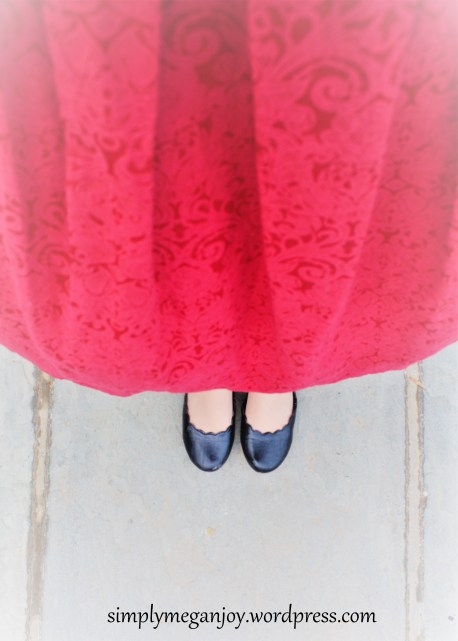
Poems of Old // Hope is the Thing with Feathers

This week’s poem is by the inspiring Emily Dickinson (1830-1886). It is believed to have been written during the first year of the Civil War and published three decades later. Below you can read her clever way with words in “Hope is the Thing with Feathers.”

DSC_0118.JPG

Hope is the things with feathers

That perches in the soul,

And sings the tune without words,

And never stops at all,


And sweetest in the gale is heard;

And sore must be the storm

That could abash the little bird

That kept so many warm.


I’ve heard it in the chillest land,

And on the strangest sea;

Yet, never, in extremity,

It asked a crumb of me.

Emily Dickinson, 1861

……………………………… 

What do you think of this poem?

Don’t you just love Dickinson’s pleasant phrasing?

…………………………………………….

Megan Joy


Poems of Old // The Lady of Shallot

This is the first post of the new 2018 weekly series: Poems of Old! Each week, I’ll share a poem or excerpt dated 1950 or older. This poem, written by Alfred Lord Tennyson in 1842, is my favorite work by Tennyson, mostly for the reason that it plays a part in the Anne of Green Gables book and film. Wanting to be like Anne, I’ve memorized the first paragraph of part two, which you can read below. I do not necessarily find the entire story of the Lady of Shallot appealing, though I like the flow and rhythm of this famous Tennyson work.Poems of Old -  The Lady of Shallot - simplymeganjoy.wordpress.com 1.JPG

Part II

(first paragraph) 

“There she weaves by night and day

A magic web with colors gay.

She has heard a whisper say,

A curse is on her if she stay

To look down to Camelot.

She knows not what the curse may be

And so she weaveth steadily,

And little other care hath she,

The Lady of Shalott.”

Afred Lord Tennyson, 1842

……………………………………………………….

Have you ever memorized a poem just for fun?

What do you think of the new series?

What’s your favorite poem written before 1950? I always need more poem to feature!

……………………………………………………

Megan Joy
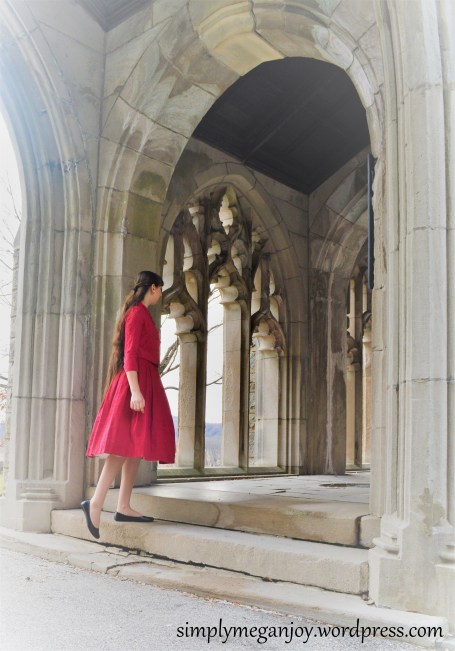
My Crimson Christmas // Ft. Lindy Bop

Quick disclaimer: This is not a paid sponsorship nor am I in affiliation with Lindy Bop.

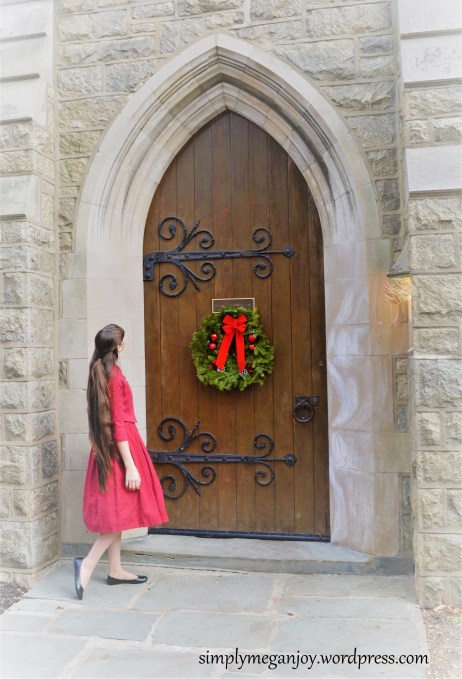
My Crimson Christmas Ft. Lindy Bop - simplymeganjoy.wordpress.com 1

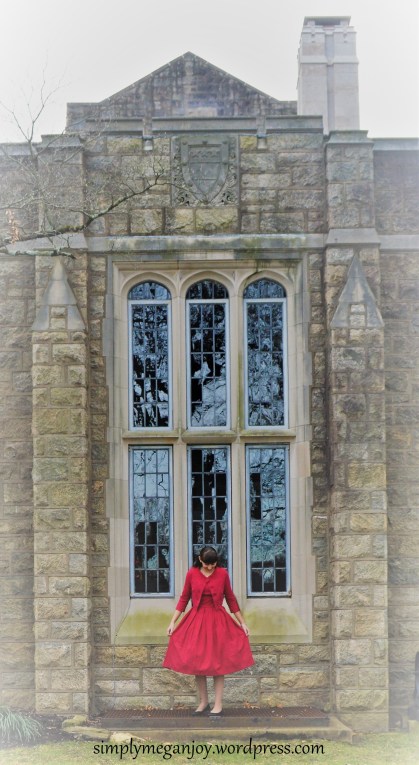
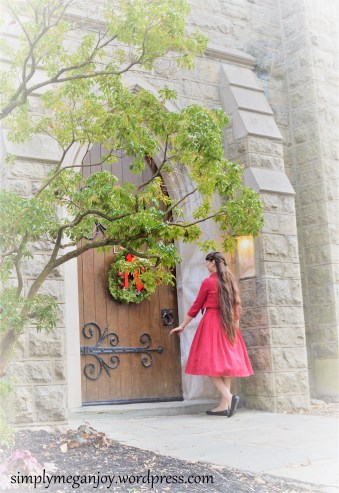
This wonderfully beautiful 1950s inspired dress called the “Marianne Red Swing Dress and Jacket Twin Set” came from Lindy Bop. It was the first time ordering from them and I can’t wait to order another dress in the future. I also bought my crinoline there which I’ve already wore this my last fashion post.

My Crimson Christmas Ft. Lindy Bop - simplymeganjoy.wordpress.com 3.JPG

My Crimson Christmas Ft. Lindy Bop - simplymeganjoy.wordpress.com 4.JPG

My Crimson Christmas Ft. Lindy Bop - simplymeganjoy.wordpress.com 6.JPG

The crimson color, the fullness of the skirt, the style of the jacket, and its perfect fit made this the best Christmas dress. I just love it! It also comes in dark blue, light blue, pink, burgundy, black, gray, and white, all of which I would love to have. Coming from London, it is of high quality and of wonderful craftsmanship. Unfortunately, the price matches the high quality, so I shall be content with this red one for a while. (P.S. I bought this particular dress on sale. Three cheers for Christmas sales!)

My Crimson Christmas Ft. Lindy Bop - simplymeganjoy.wordpress.com 7.JPG

My Crimson Christmas Ft. Lindy Bop - simplymeganjoy.wordpress.com 8.JPG

My Crimson Christmas Ft. Lindy Bop - simplymeganjoy.wordpress.com 9.JPG

If you love vintage fashion and classy clothes, you must head over to Lindy Bop. They have so many great finds, and coincidentally, they’re having a 60% off end of year sale, which includes the “Marianne Burgundy Swing Dress and Jacket Twin Set!” Go check it out and come back and tell me if you like it!

My Crimson Christmas Ft. Lindy Bop - simplymeganjoy.wordpress.com 11.JPG

The New Year will soon be upon us, so this will be the last fashion post of the year! Do you have any specific goals for 2018? Any fashion goals?

…………………………………………..

dress and jacket // lindy bop

shoes // payless

crinoline // lindy bop

………………………………………….

Megan Joy

Five Writing Misconceptions

Being a writer, I’ve gone to seminars and conferences, read writing books and articles, and was given advice by real authors on how to make my books the best that they could be. I, at one time or another, believed a lot of what I was told, and altered some of my work to fit with “the right” criteria. That was a mistake. Here’s a list of five writing misconceptions that I was told to believe.

 1. “You must begin your book with an exciting scene.”

I was once told that my book had to begin when everything is changing for my main character: “when their world is turned upside-down” so you can grab your reader’s attention. I found a few things wrong with this advice, the first being, if we all started our books the same way, they wouldn’t be special or unique. It would be pretty boring to read the same kind of introduction in every book you open, wouldn’t it? The second problem I saw was, if we began our story when the character’s world is turned upside down, how would we know what is normal for them? Without any background story on our character, how could we distinguish oddities from their ordinary life? We wouldn’t know their everyday standards. The reader must connect with the character before he or she can care or worry about what is going to happen to that main character. Creating a subtle backstory first can help the reader to recognize abnormal happenings from ordinary ones. Beginning your book with a calm opening about the character’s everyday life is absolutely fine; there are so many famous classics that begin with a simple scene, like Anne of Green Gables, A Little Princess, and Sense and Sensibility. These authors didn’t follow the rule of the “dramatic opening scene” yet they have all have become enormously popular, selling a few million copies of their books!

2. Your book should contain 70% dialog.

A published author once suggested that I didn’t have enough dialog in my books. I went on to learn that publishers sometimes determine your book’s success by the amount of white space on each page. Having a page of dialog will provide more blank spaces than a full page of narrative, therefore, I was told that more “talking” is always best. So I decided to test out this theory and wrote a short book mainly full of dialog. It was choppy and not well explained, might I say. I couldn’t elaborate on descriptions or explain the surroundings without having someone speak it aloud. This idea of “lots of dialog” is a modern concept, so I can see how it would work for books taking place in the modern world, but if you enjoy writing historical fiction like I do, then this “all dialog” theory probably won’t work. It’s just not realistic.

3. Tell your reader instead of showing (because it’s shorter).

I’ve heard this one a few times. Some say that a writer should tell the reader about something, not show them, to keep the pace moving. I however, disagree. I find it much more interesting if I am actually shown something and not just told about it. The difference can have a lasting impact on the reader. Here is an example I made up:

Telling Version: “The boy told his dog to stay. The dog stayed.”

Showing Version: “He held out his thin little hand like a fireman stopping traffic as he slowly backed away from his fur-matted friend. Oh, how those four dirty paws wanted to bound across the space between them and gift the boy with a thousand slobbery kisses, but being the keen and obedient dog that he was, he planted his feet in the dewy grass and vowed to keep as motionless as the statue he had seen in the park.”

Both versions were each made up of only two sentences, telling the same story, yet they are both extremely different. Which one provided the most information? Which one would you be more likely to continue reading if it were the opening of a book? Which one do you find more interesting? Probably, the second one is the answer to all of these questions. The second version let us know that: the boys was small, the dog was scrawny, the dog loved the boy, the dog was obedient, it happened in the morning (dewy grass), and they take walks in the park together. The first version didn’t tell us any of that!

4. End each chapter with a cliffhanger.

Many say that to keep your readers flipping pages, you must create a cliffhanger at places where the reader is most likely to put the book down, like at the end of a chapter. I find that this strategy just isn’t realistic. Yes, cliffhangers are exciting and can add a bunch to your book, but one in every chapter is a bit excessive. Besides, if you have to bait your readers with a constant strand of dangerous and uncertain situations to stay seated and continue reading, it may not be a very interesting book in the first place.

5. Reading will make you a better writer.

Now, parts of this phrase are true. Reading other books can definitely help you with writing your own book. But when people give this advice, they forget to mention that it depends on what you read! If you read a lot of terrible books over time, you may find that you morph into having those same writing habits and write terribly. While at the same time, if you read many great books full of beautiful words and brilliant plots, your writing is more likely to improve. It is like that saying, “You are what you eat.” Instead it’s, “You are what you read.” If you want to write inspiring things, read inspiring things.

Bonus misconception: The publisher is always right. 

This is quite far from the truth. Many people I’ve met dream of the day when their book is accepted for publication. When they get turned down, they revise their work to fit the publisher’s standards. Then if their book is accepted they allow the editors to change whatever they see fit, slap a generic unenticing cover on it, and ship it out. Sadly, this happens a lot and many just accept it because they want their book published. But the publisher is not always right and you shouldn’t have to be forced to alter your hard work to please someone in order to get published. You don’t always have to submit to what publishers say, because they’re not always right. You’re the author, it’s your work, your special creation that no one can take away. Self publishing is a good way to ensure that your story is published the way YOU want it.

………………………………….

Do you like to write fiction?

Were you ever told to believe one of these misconceptions?

Do you have any other writing myths or misconceptions to share?

……………………………………

Megan Joy